Johanna Goulart
CEO

If you ever wondered “what is SEO?” and why it appears in so many digital marketing strategies, now we give you the answer.
SEO, or Search Engine Optimization, is the set of practices that help your content get found by the people who matter most: your audience.
In this guide, you’ll understand what SEO is, how it works in practice, and why mastering it is essential for growing on the internet, whether on Google or in AI-generated responses.
What is SEO?
SEO (Search Engine Optimization) is the set of techniques and strategies used to improve the visibility of a website or content on search engine results pages, especially Google.
When someone searches for something online, Google has to choose which pages to show first. SEO is exactly what helps your content appear among the top positions.
The goal of SEO is to attract organic traffic. That is, visitors who come to your site naturally, without you having to pay for ads. And the better your SEO, the greater the chances that your brand will be found by the right people at the right time.
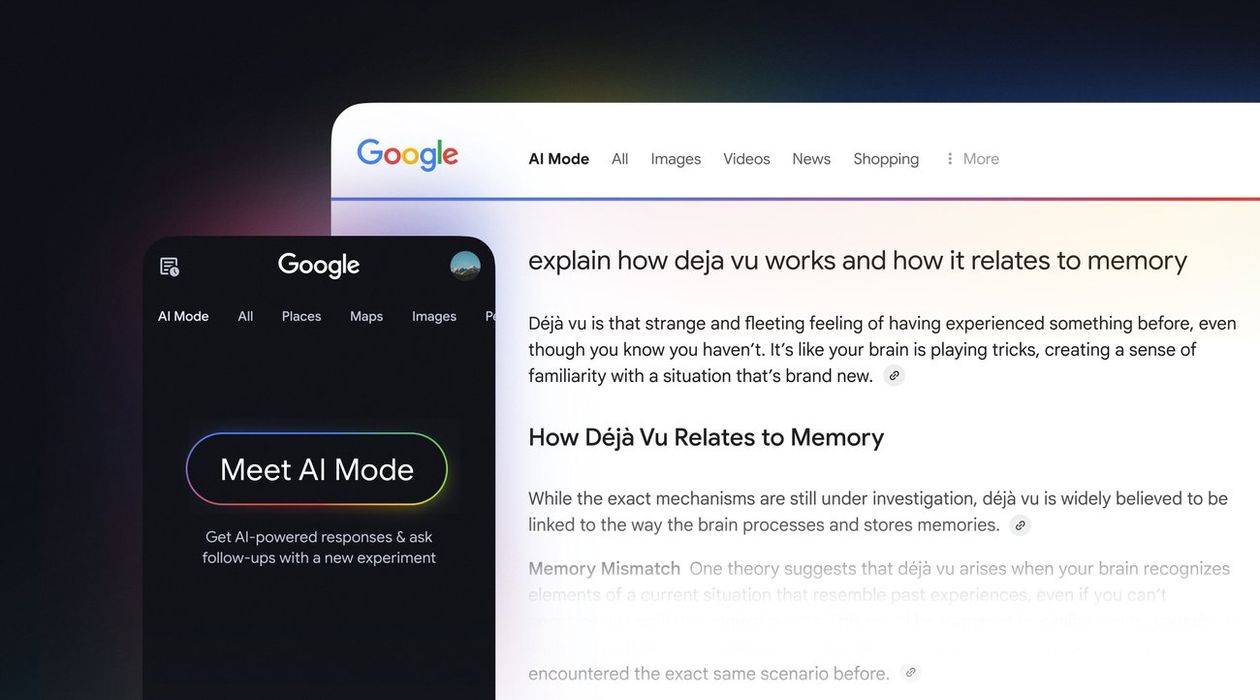
Today, SEO goes beyond Google: with the rise of generative AIs (like ChatGPT, Gemini, and Copilot), optimizing your presence for AI-generated responses has also become part of the equation.
How does SEO work?
SEO works by helping search engines understand the content of your site and judge it as relevant and trustworthy for users searching for a particular topic.
It operates across three main areas:
Technical SEO
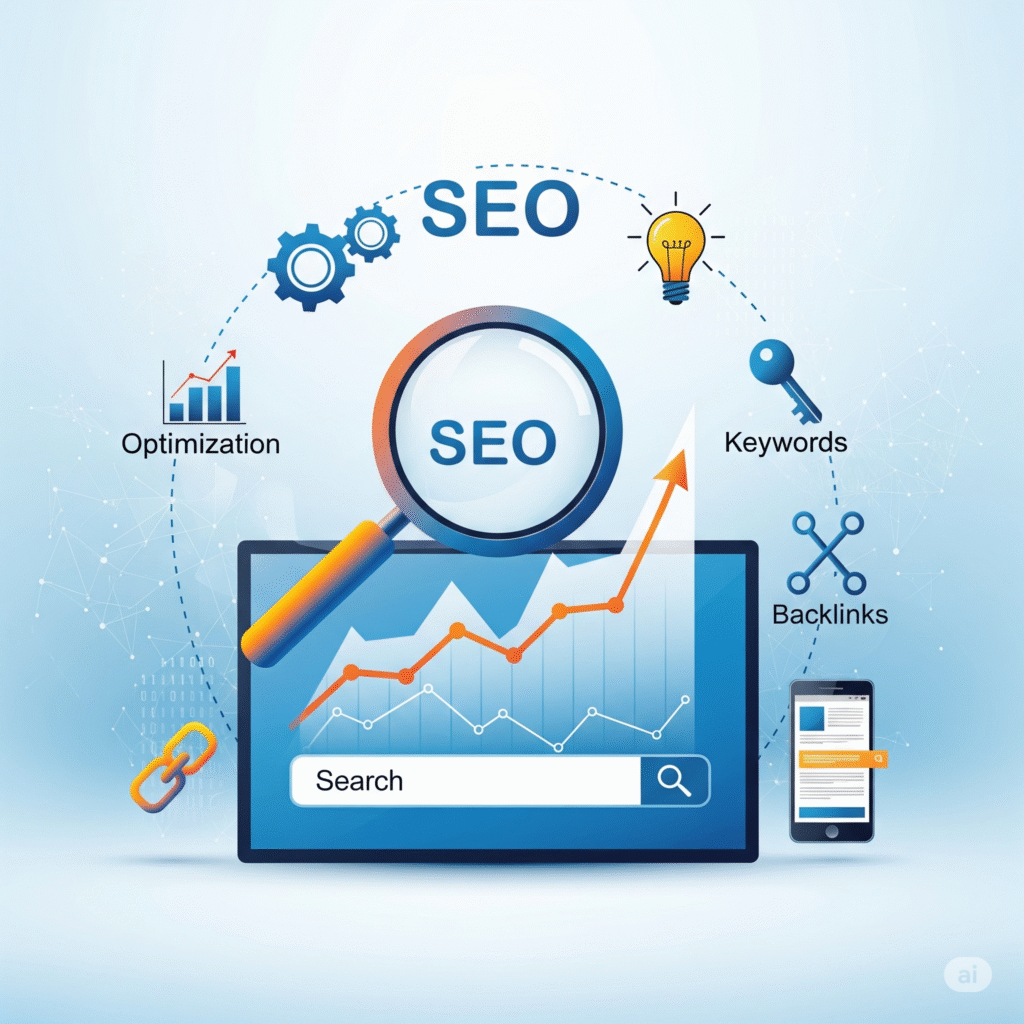
Involves improvements in site structure, such as loading speed, mobile responsiveness, use of HTTPS, sitemap, among others. A well-structured site is more easily read by Google’s bots.
On-page SEO
This includes visible elements within the content: use of relevant keywords, headings, meta descriptions, internal links, images with alt text, and good readability. All of this shows search engines that your content is useful and well-organized.
Off-page SEO
Refers to external factors, such as the quantity and quality of other websites linking to yours (backlinks). These links act as “votes of confidence” and increase your authority in the eyes of search engines.
But traditional SEO is changing…
With the increasing use of AI to search for information, the way SEO works is also evolving: now, in addition to pleasing Google, brands must ensure they are properly referenced by AIs, through sources like Wikipedia, review sites, trustworthy blogs, and industry portals.
When done correctly, SEO improves your ranking and increases the chances that your content will appear in top search results — or even be cited directly by AIs in their answers.
Why is SEO important?
SEO is essential because it connects your content with the people who are truly interested in it.
In an increasingly competitive digital environment, it’s not enough to have a good product or service: you need to be found.
With a good SEO strategy, your brand:
- Appears in the top positions on Google, where most clicks happen
- Attracts qualified traffic, that is, visitors with a real interest in what you offer
- Reduces Customer Acquisition Cost (CAC), since organic traffic doesn’t rely on paid ads
- Builds digital authority by showing that your content is trustworthy and relevant
And today, with the growth of voice search and generative AI, SEO also helps your brand appear in automated answers that influence purchase decisions. It’s important to note that generative AI is increasingly involved in these decisions.
In other words, investing in SEO is investing in the visibility and sustainability of your online business.
SEO and Artificial Intelligence: What’s the connection?
The relationship between SEO and Artificial Intelligence is becoming increasingly deep and strategic.
Search engine algorithms themselves use AI to better understand user intent and deliver more accurate results (such as Google’s BERT or MUM). This means content must be increasingly clear, useful, and well-structured.
Additionally, AI tools are changing how people consume information.
Platforms like ChatGPT, Gemini, Perplexity, and Copilot deliver instant answers without users needing to visit a website (and this behavior is becoming more and more common).
And these answers are built based on public and trusted sources, which is where the new phase of SEO comes in.
Now, in addition to optimizing for search engines, brands must ensure their information is accurate, up-to-date, and well-positioned in sources that influence AI responses. This is what we call Artificial Intelligence Optimization (AIO), an evolution of traditional SEO.
In other words, understanding what SEO is isn’t just about Google: it’s about being relevant on any platform that organizes information for the user.
How to start applying SEO to your website
Implementing SEO on your website may seem complex, but you can start with simple and effective steps:
- Research relevant keywords: Use the right tools to understand what your audience is searching for and which terms to include in your content.
- Create useful and original content: Produce texts that truly answer your audience’s questions, using clear language, organized structure (titles, subtitles, lists), and a focus on quality.
- Optimize on-page content: This includes adjusting headings (H1, H2, etc.), inserting keywords naturally, adding attractive meta descriptions, and using internal links between your content.
- Build authority with backlinks: Share your content, seek partnerships, and encourage other relevant sites to link to yours, as this shows Google that you’re trustworthy.
- Monitor and adjust: Use analytics tools to track your page performance and make continuous improvements.
And if you want to go further, consider how your brand is being represented in AI responses. SEO and AIO now go hand in hand. Companies that understand this first will have a real competitive advantage.
???? Tip: First Answer analyzes exactly how your brand is performing in responses generated by generative AIs and provides valuable insights to improve and highlight it!
SEO is the link between your brand and those searching for it
Understanding SEO is the first step to building a strong and sustainable digital presence.
Whether on Google or in an AI response, SEO is what ensures your brand is found, understood, and chosen.
???? Tip: SEO changes over time. So staying on top of trends and using AI to your advantage can put you ahead of the competition. And First Answer does that for you!
While you focus on your business, First Answer monitors how your brand is appearing (or failing to appear) in responses generated by Artificial Intelligences like ChatGPT, Gemini, Copilot, and others.
The platform identifies when your brand is mentioned, in what context, and which sources are influencing those responses.
With practical insights and updated data, you understand your position in the AI search ecosystem and can act strategically to strengthen your digital presence where decisions are being made: in automated responses.