Rodrigo Beckmann
CEO

Search Engine Optimization (SEO) has always been about visibility, getting your content in front of the right people at the right time. But something fundamental has changed. The rise of AI-powered search engines is rewriting the rules of discoverability.
We’re no longer optimizing just for search engines. We’re optimizing for generative engines, large language models (LLMs) that interpret, summarize, and even create content in response to search queries.
If traditional SEO was about getting ranked, AI SEO is about getting recognized and quoted by machines.
With the launch of Google’s AI Overviews, Bing’s Copilot, Perplexity AI, and ChatGPT’s Browse with Bing, search has become more than links on a page, it’s now a conversation. And your content needs to be part of it.
In this article, we’ll explore the foundational elements of SEO with AI, the strategies, tools, and mindset shifts needed to thrive in a landscape where algorithms read like humans and answer like experts. Whether you’re a content strategist, an SEO manager, or a brand trying to stay ahead, this guide will help you build an SEO stack that doesn’t just keep up, it leads.
What is AI SEO (And why it’s different)?
AI SEO isn’t a buzzword. It’s a fundamental shift in how search works.
For decades, SEO revolved around matching keywords with queries. You’d research search terms, write optimized content, earn backlinks, and hope Google ranked you on Page 1. That model hasn’t disappeared, but it’s no longer enough.
With the rise of large language models (LLMs) like GPT-4, Claude, and Gemini, search engines no longer rely solely on keywords and links. They use artificial intelligence to understand context, intent, and relationships between concepts, even if exact keywords aren’t present.
This evolution has led to a new discipline: AI SEO, or optimizing content for and with artificial intelligence.
Traditional SEO vs. AI SEO
| Feature | Traditional SEO | AI SEO (Modern SEO with AI) |
| Based on | Keywords & backlinks | Semantic understanding, entities, and relevance |
| Content format | Long-form, keyword-dense | Clear, modular, summarized |
| Search result type | Link listings (blue links) | AI Overviews, featured snippets, summaries |
| Optimization tools | Yoast, Moz, Ahrefs | Surfer, Jasper, GPT-4 + Semrush |
| Measurement focus | Rank position | Visibility in AI responses, summary citations |
| Primary audience | Humans via Google | Humans and AI agents |
How AI changes search
AI-first search engines do more than crawl pages. They read, interpret, and repurpose content.
When a user asks a question, generative search doesn’t just return links. It may:
- Extract a paragraph from your blog and summarize it
- Combine insights from multiple sources
- Prioritize structured, fact-based content over long-form opinion pieces
In other words: you may never get the click, unless your content gets the quote.
The SEO Opportunity in AI Search
Here’s the silver lining: brands that adapt can outperform legacy players.
In traditional SEO, it’s hard to outrank sites with decades of authority. But in AI SEO, content that’s better structured, clearer, and more factual can leap ahead, even if the site has lower domain authority.
Why? Because LLMs value clarity, structure, and verified knowledge more than PageRank.
What AI SEO Really Means
To win in this environment, your content must:
- Be understood by machines
- Be trusted by machines
- Be formatted for machines to quote and summarize
- Be created and optimized with help from AI tools
This is SEO with AI, and it changes everything from content planning to publishing.
Read more: How AI in SEO is Transforming SEO
Structured content that speaks AI
One of the most important, and most overlooked, elements of AI SEO is structure.
Large Language Models (LLMs) like GPT-4 and Google’s Gemini don’t just index your pages, they read them. But for a machine to understand your message, your content must be organized in a way that’s machine-readable and quote-ready.
Let’s break that down.
Why structure matters in SEO with AI
When AI models evaluate a page, they’re looking for:
- Clear hierarchy of information (H1 → H2 → H3)
- Concise sections that can be quoted in summaries
- Answer-ready formats, like FAQs, how-tos, lists, and bullet points
Unstructured or overly dense content confuses AI and reduces your visibility in:
- Google AI Overviews
- Bing Copilot answers
- Perplexity AI results
ChatGPT “Browse with Bing” outputs
The goal is not just to rank, it’s to be understood, cited, and summarized by machines.
Best practices for structuring content for AI SEO
Here’s how to design content that AI loves:
1. Use semantic HTML (Proper Headings)
- Every page should have one H1, followed by H2s and H3s in logical order.
- Avoid skipping heading levels or using headers for visual style only.
- This hierarchy helps AI understand what’s important.
2. Break content into scannable sections
- Think in modules, not essays.
- Use short paragraphs, pull quotes, and section dividers.
Aim for clear topical boundaries — one idea per block.
3. Include lists, tables, and bullet Points
- AI models love structured data.
- Lists are often quoted in AI summaries (especially numbered ones).
- Tables clarify comparisons or grouped data (e.g., features, pricing, frameworks).
4. Answer questions Up Front
- Use question-based subheadings (e.g., “What is AI SEO?”).
- Follow them with short, direct answers before elaborating.
This is how you win position zero and AI Overview citations.
5. Add a TL;DR or summary section
- Short summaries at the top or bottom of a page help AI find concise answers.
- Even better if they’re labeled: “Summary,” “Key Takeaways,” or “TL;DR”.
Think like a machine: Use structured data
Beyond layout and formatting, don’t forget schema markup:
- Use schema.org to define content types (articles, FAQs, reviews)
- Helps search engines understand your content’s purpose
Boosts eligibility for rich results (and visibility in AI snippets)
???? Tools to help you structure content better
| Tool | What It Helps With |
| Surfer SEO | Analyzing optimal content length + structure |
| Jasper AI | Drafting modular, scannable sections |
| Frase.io | Structuring content to match featured snippets |
| Yoast / RankMath | Headings, readability, schema |
| ChatGPT + Plugins | Rewriting paragraphs for clarity + modularity |
Pro Tip: Optimize for “snippetability”
Write content that could be lifted verbatim by an AI model. That means:
- Avoid fluff
- Lead with the answer
- Use clear, declarative sentences
You’re not just writing for a reader. You’re writing for a reader with perfect recall and no time to waste — the AI itself.
Semantic optimization & entity-based SEO
Traditional SEO focuses heavily on keywords. But AI SEO focuses on meaning.
Large Language Models (LLMs) don’t rely on exact-match keywords — they understand concepts, relationships, and entities. That means your content needs to be semantically rich and entity-aware to perform well in AI-powered search.If structured content helps AI read your page, semantic optimization helps AI understand what your page is about — and why it matters.
What is semantic SEO?
Semantic SEO is the practice of optimizing your content around topics, concepts, and entities, not just individual keywords. It’s about making your content deeply connected to the ideas and things users are searching for.
Example:
Let’s say your keyword is “best electric cars.”
A semantically optimized page might include:
- Entities: Tesla, Rivian, battery range, EV tax credit, charging stations
- Related concepts: sustainable transportation, EV performance, federal incentives
- Structured schema: Product, Review, FAQ
By connecting these ideas together, you’re helping AI understand:
- What your content covers
- How it’s related to broader conversations
- Why it’s relevant to a user’s query — even if they search with different wording
What Are Entities in AI SEO?
An entity is a real-world concept with a unique identity, a person, place, product, company, date, law, or abstract idea.
Search engines and LLMs build knowledge graphs that map how entities relate to one another. The more clearly your content connects to these graphs, the more trustworthy and relevant it becomes in AI eyes.Entities are how machines build meaning. They’re the language of AI SEO
Examples of Common Entities:
| Type | Examples |
| People | Elon Musk, Oprah Winfrey, Barack Obama |
| Companies | Apple, Google, OpenAI |
| Places | New York City, Silicon Valley, United States |
| Products | iPhone 15, Tesla Model Y, ChatGPT |
| Concepts | Artificial Intelligence, Carbon Emissions, SEO Strategy |
How AI Uses Entities in Ranking and Summarization
AI-powered search engines like Google use entity salience to evaluate how central an idea is to a page. If your article is about “contract law,” but never mentions key entities like “breach of contract,” “damages,” or “uniform commercial code,” the AI may decide your content is not authoritative or complete.
The more relevant entities and relationships you include:
- The better your semantic coverage
- The higher your entity salience score
- The more likely you are to appear in AI Overviews and snippet answers
How to Optimize for Semantic and Entity SEO
1. Focus on Topics, Not Just Keywords
- Use keyword tools that group terms by intent or cluster
Cover the full context of the topic (not just the primary term)
2. Mention Related Entities
- Include relevant names, places, concepts, and terms that help AI anchor your content
- Example: If you’re writing about “Web3,” mention Ethereum, smart contracts, NFTs, and decentralization
3. Use Internal Linking to Show Relationships
- Link related articles together to build semantic bridges
- Help AI understand content relationships across your site
4. Add Schema Markup for Entities
- Use schema.org to define key elements: Person, Organization, Product, FAQ, etc.
- Helps AI connect your content to known data types
Tools to Help with Semantic SEO
| Tool | What It Does |
| Google NLP API | Measures entity salience + sentiment |
| InLinks | Maps internal linking by entity relationships |
| Surfer SEO | Suggests keyword clusters and semantic gaps |
| ClearScope | Grades content depth based on semantic coverage |
| GPT-4 | Can simulate entity mapping through prompts |
Real-world impact of entity optimization
A semantically rich page is more likely to:
- Rank for long-tail and related searches
- Be included in AI summary boxes
- Be seen as authoritative, even if your domain is smaller
In a world where LLMs read and reason, your job is to feed the algorithm with clarity.
Matching user intent with AI SEO
At the core of any successful SEO strategy is understanding why someone is searching. That “why” is called search intent, and it’s absolutely critical in the era of AI SEO.
Here’s the difference today:
In the past, SEOs reverse-engineered searcher intent based on keywords. But with AI in the mix, search engines themselves understand and classify intent automatically, sometimes even better than humans can.
That means your content must align with how AI interprets intent, or it will simply be ignored.
What is search intent in AI SEO?
Search intent is the goal behind the query, what the user wants to accomplish when they search.
| Intent Type | What It Means | Example Queries |
| Informational | Learn something | “What is generative AI?” |
| Navigational | Go to a specific site or brand | “OpenAI login” |
| Transactional | Make a purchase or complete an action | “Buy SEO audit software” |
| Comparative | Evaluate options before deciding | Best AI SEO tools 2025″ |
How AI classifies and ranks based on intent
AI-powered search engines don’t just read keywords, they interpret the context and format of your content to decide:
- What intent your page serves
- Whether it matches the user’s query
- Whether it’s better than other available answers
If your content doesn’t match the user’s intent, no matter how well it’s written, it won’t show up.
How to align content with search intent
Here’s how to ensure your content aligns with AI-inferred user intent:
1. Identify the Intent Behind Target Queries
Don’t just target “keywords” — analyze why someone is searching that term.
Tool tip:
Use Semrush, Ahrefs, or Google Search Console to spot behavior patterns (CTR, bounce rates) that suggest mismatch between your content and actual intent.
2. Match the Format to the Intent
Different intents need different types of content.
| Intent Type | Best Content Format |
| Informational | Blog posts, guides, how-tos, FAQs |
| Navigational | Homepage, landing pages, brand overview |
| Transactiona | Product pages, landing pages, CTAs |
| Comparative | Lists, tables, reviews, head-to-head content |
⚠️ Don’t serve a 3,000-word article to a user who just wants a product page — AI will detect that mismatch and pass over your page.
3. Use intent-signaling language
AI models pick up on language signals in your content to confirm alignment.
Examples:
- Informational: “In this guide…”, “Here’s how it works…”
- Transactional: “Buy now”, “See pricing”, “Try for free”
- Comparative: “Top 5 tools…”, “X vs Y: Which is better?”
Navigational: “Log in to your account”, “Visit the homepage”
4. Add clear meta data and snippets
- Titles and meta descriptions should signal intent clearly
- Include relevant FAQ schema or HowTo schema to help AI surface your content more precisely
Tools to analyze and align intent
| Tool | Function |
| Frase | Shows top SERP formats + intent alignment |
| Clearscope | Maps content to intent-driven terms |
| Surfer SEO | Analyzes SERPs to reveal intent and recommend format |
| GPT-4 Prompting | Simulate user personas and generate queries by intent |
Pro Tip: build a multi-intent content funnel
Don’t stop at one post per keyword. Build content clusters that address different intent layers for the same topic.
Example:
Topic: “AI SEO Tools”
- Informational: “What is AI SEO and how does it work?”
- Comparative: “Top 10 AI SEO Tools in 2025”
- Transactional: “AI SEO Software — Free Trial”
Navigational: “Jasper SEO Login”
This makes your brand visible at every stage of the buyer’s journey — and gives AI multiple entry points to quote or rank your site.
Technical SEO for AI performance
No matter how great your content is, if your site isn’t technically sound, it won’t matter. AI-driven search engines prioritize user experience, and that begins with fast, accessible, clean code.
But here’s the twist: in the world of AI SEO, technical SEO does more than help you rank — it helps AI understand, crawl, and cite your content.
That means every technical element of your site needs to be optimized not just for Googlebot, but for LLMs trained to read, summarize, and serve your content in conversational answers.
Why technical SEO is even more important in the age of AI
Modern AI models evaluate:
- Performance signals (e.g. Core Web Vitals)
- Structured data (to classify page type)
- Accessibility and mobile usability
- Internal linking and crawl depth
- Readability and content load architecture
These signals directly impact your visibility in:
- AI Overviews
- Zero-click snippets
- Citations in AI-generated summaries
AI doesn’t guess. If your page isn’t fast, readable, and structured, it won’t be used — no matter how “valuable” the content is.
Essential technical SEO elements for AI visibility
1. Core Web Vitals (CWV)
These are Google’s primary UX metrics:
- LCP (Largest Contentful Paint) – How fast does the page load?
- FID (First Input Delay) – How quickly can a user interact?
- CLS (Cumulative Layout Shift) – Is the layout stable?
???? Why it matters: AI prioritizes content that delivers instantly and smoothly — especially for mobile-first indexing.
2. Mobile optimization
- Over 60% of global traffic is mobile — and most AI answers are mobile-first
- Your content must be fully responsive, scrollable, and tappable
- Google’s Mobile-Friendly Test is just the baseline — aim higher
3. Crawlability and indexability
- Ensure your pages are accessible to crawlers (no rogue noindex or disallow)
- Use internal links to surface deep content (AI reads deeply linked pages)
- Submit XML sitemaps to Google Search Console and Bing Webmaster Tools
4. Clean, Semantic HTML
- Use semantic tags: <article>, <section>, <header>, <footer>
- Avoid bloated page builders and inline styles that confuse crawlers
- Structured HTML helps LLMs extract meaning more effectively
5. Structured data (Schema Markup)
- Use Schema.org to mark up:
- Articles
- Products
- FAQs
- How-tos
- Reviews
- AI search engines use structured data to classify content types and pull answers accurately
6. Fast, Secure Hosting
- HTTPS is table stakes
- Use modern hosting platforms (e.g. Vercel, Netlify, Cloudflare Pages)
- Deploy with CDNs to serve AI crawlers and users from the nearest location
7. Accessibility (A11Y)
- Use proper alt text, ARIA labels, and keyboard navigation
- Google and other AI systems use accessibility layers to help assess readability and UX for diverse audiences
8. Page Experience Signals
Google and Bing reward sites that:
- Don’t overwhelm users with pop-ups or ads
- Load key content above the fold
Present a clean, scannable layout that supports instant answers.
Tools to supercharge technical AI SEO
- Don’t overwhelm users with pop-ups or ads
- Load key content above the fold
- Present a clean, scannable layout that supports instant answers
| Tool | What It Does |
| Google Lighthouse | Audit Core Web Vitals, performance, accessibility |
| Screaming Frog SEO Spider | Crawl your site and analyze crawl/index issues |
| Ahrefs / Semrush Site Audit | Deep technical SEO reporting |
| Cloudflare | Optimize speed, security, and global delivery |
| ChatGPT + Screaming Frog Plugin | AI-assisted SEO diagnostics from crawl data |
???? Pro tip: AI Uses technical signals to filter sources
Think of AI Overviews as quote engines. They need fast, clean, semantically clear content they can process in milliseconds.
If your site is slow, messy, or missing metadata?
You’ve lost the race before the user even searches.
Learn more: What elements are foundational for SEO with AI? The Guide (2025)
Optimizing for conversational and voice AI search
Search is no longer limited to typing a few words into a browser. With voice assistants, smart speakers, and AI chatbots, users are interacting with search engines like they’re talking to another human being.
That means your content needs to be conversational, direct, and designed to answer spoken questions — not just keyword-rich.Welcome to the world of conversational SEO, where your competition is not another blog — it’s Siri, Gemini, ChatGPT, and Alexa.
Why conversational search matters now
Voice and AI-driven search is:
- Natural language-based (e.g. “What’s the best running shoe for bad knees?”)
- Question-heavy (think: how, what, when, where)
- Contextual (AI remembers what you said before)
- Summary-seeking (users want the answer, not the link)
With the explosion of LLMs integrated into search (like Google’s Gemini or Bing’s Copilot), your content now needs to work in a conversational interface, not just a search results page.
How LLMs handle conversational queries
AI assistants pull answers by:
- Parsing the full intent of a spoken question
- Scanning indexed or cited pages for the most precise phrasing
- Generating a human-like summary from multiple sources
- Delivering the response in seconds — often without a link click
That means your content must be:
- Simple enough to read aloud
- Precise enough to be quoted
- Authoritative enough to be trusted instantly
How to optimize for conversational and voice AI Search
1. Use Natural Language in Your Content
- Write like you speak: clear, concise, direct
- Avoid jargon unless your audience expects it
- Structure content in Q&A format where possible
2. Include Long-Tail, Voice-Friendly Phrases
Voice searches are longer and more specific.
Instead of optimizing for:
“best running shoes”
Optimize for:
“What are the best running shoes for long-distance beginners?”
“Which running shoes reduce knee pain?”
???? Pro tip: Use AI tools to simulate spoken queries based on your topic.
3. Answer Questions Up Front
LLMs scan for clear, direct answers. Use the inverted pyramid:
- Lead with the answer
- Then explain it
- Then link to related concepts
Q: What is AI SEO?
A: AI SEO is the process of optimizing content for artificial intelligence-driven search engines and LLMs like Google Gemini or ChatGPT, focusing on semantic structure, speed, and clarity.
4. Implement FAQ Sections
- Add an FAQ block to every major page
- Mark it up with FAQ schema (structured data)
Helps your content show up in featured snippets and voice responses
5. Use conversational headers and titles
Instead of:
- “SEO Best Practices 2025”
Try:
- “What Are the Best SEO Practices for 2025?”
Search engines love headers that mirror user queries — especially in natural phrasing.
6. Keep responses short and snippetable
Voice assistants will often read out only 35–50 words.
Aim to:
- Keep your main answer to 1–2 short sentences
- Use bullets or bold formatting to increase clarity
Avoid parentheticals and run-on explanations
Bonus: optimize for follow-up context
AI systems like Gemini and ChatGPT support conversational context. That means the second question might depend on the first.
Example:
- Q1: “What is AI SEO?”
- Q2: “What tools do I need to get started?”
Your content should:
- Anticipate follow-ups
- Link related answers together
Provide internal linking or modular paragraphs to support multi-step search
Tools to help with Conversational SE
| Tool | Function |
| AnswerThePublic | Discover question-based queries |
| Frase.io | Optimize content for snippet-style answers |
| Jasper AI / ChatGPT | Simulate voice queries and generate natural responses |
| AlsoAsked.com | Discover follow-up questions and intent trees |
| Google’s People Also Ask | Source real-world phrasing from users |
????Real-world Example: FAQ Schema in action
Let’s say you write a post titled:
“What Is AI SEO?”
Add this near the bottom of your page:
<script type="application/ld+json">
{
  "@context": "https://schema.org",
  "@type": "FAQPage",
  "mainEntity": [{
    "@type": "Question",
    "name": "What does AI SEO mean?",
    "acceptedAnswer": {
      "@type": "Answer",
      "text": "AI SEO refers to the practice of optimizing content for AI-powered search engines that rely on semantic understanding and machine learning."
    }
  }]
}
</script>
Google and AI engines will use that schema to pull your exact response — in voice, chat, or overview format.
Excellent. Now let’s cover one of the most underutilized but high-impact components of SEO with AI: feedback loops and continuous optimization.
Real-Time feedback loops & optimization with AI
In traditional SEO, feedback cycles were slow.
You’d publish a post, wait weeks or months to see ranking changes, tweak your on-page content, and monitor your traffic again. That worked in a static web. But in an AI-powered search ecosystem, optimization needs to happen faster, often in near real-time.
AI SEO isn’t just about publishing smarter, it’s about learning faster.
Welcome to continuous optimization, where AI-powered feedback loops help you refine content, strategy, and structure with velocity.
What is an SEO feedback loop?
A feedback loop is a cycle where data from your SEO performance is:
- Collected
- Interpreted
- Used to make improvements
- Monitored again for results
With AI tools, these steps can be automated, accelerated, or deeply personalized — allowing you to adapt your SEO strategy as search behavior shifts.
Why Real-Time optimization is now essential
AI-generated search results (like Google’s AI Overviews) are dynamic:
- They can change from day to day
- They are driven by fresh, concise, trusted content
- LLMs pull from a variety of sources in real time
That means what worked last week may not work this week — and what worked in organic rankings may not show up in AI summaries.
You need systems to monitor both.
What should you track in AI SEO feedback loops?
Here are the key indicators to watch:
1. Search Console trends
- Click-through rate (CTR) drops on pages that used to perform well
- New impressions from long-tail queries suggest LLMs are surfacing different language
- Identify which pages are gaining or losing visibility in zero-click results
2. AI Snapshot visibility
- Are your pages appearing in Google AI Overviews?
- Are your snippets being quoted by ChatGPT Browse, Bing Copilot, or Perplexity AI?
- Use manual monitoring and tools like AlsoAsked, SEOClarity, and SERP tracking tools that now include AI sections
3. Engagement metrics
- Time on page, scroll depth, and bounce rate all tell you if users are finding value in what they see
- If bounce is high, AI may be showing your content but not contextualizing it properly — tweak clarity, structure, and summary blocks
4. Snippet Performance
- Track whether your FAQ, how-to, and definition content is appearing in position zero
- Test rewrites of the first 100 words to make them more snippetable
- Rotate “summary sentences” to test which ones earn AI quotes
How AI can help you iterate faster
AI tools can automate parts of your feedback loop. For example:
| Tool / Platform | Function in Feedback Loop |
| ChatGPT + GA4 Data | Summarize user engagement by page and suggest optimizations |
| Surfer SEO Audit | Detect content decay, score semantic gaps, and recommend rewrites |
| Frase Analytics | Tracks visibility and usage in SERPs + AI features |
| ContentKing | Monitors site changes and SEO health in real time |
| SEO.app / Jasper Analytics | AI-assisted rewrite suggestions based on performance indicators |
Example: Feedback Loop in Practice
Let’s say you published a post:
Title: “Best AI Tools for SEO in 2025”
Issue: It had 1,200 visits in April, but only 300 in June. Bounce rate is up.
Your loop:
- Check GSC: new competing AI articles may be outranking you in AI Overviews
- Ask ChatGPT to audit top 3 paragraphs for clarity and snippet-readiness
- Run Surfer SEO to re-score against new top-ranking competitors
- Rewrite intro + rephrase FAQs to better match current user intent
- Republish and track CTR and impressions in the next 7–14 days
This isn’t a monthly process, it’s a weekly sprint cycle.
Pro Tip: Use AI to simulate user intent shift
Prompt ChatGPT with:
“Act like a user searching for [query]. What are 5 follow-up questions you would ask after reading [your URL]?”
You’ll often discover intent gaps you didn’t account for — leading to new FAQ blocks, internal links, or even whole new pages.
How to show up in AI overviews (GEO strategy)
Google’s AI Overviews (and similar generative search results from Bing, ChatGPT, and Perplexity) represent a radical change in visibility.
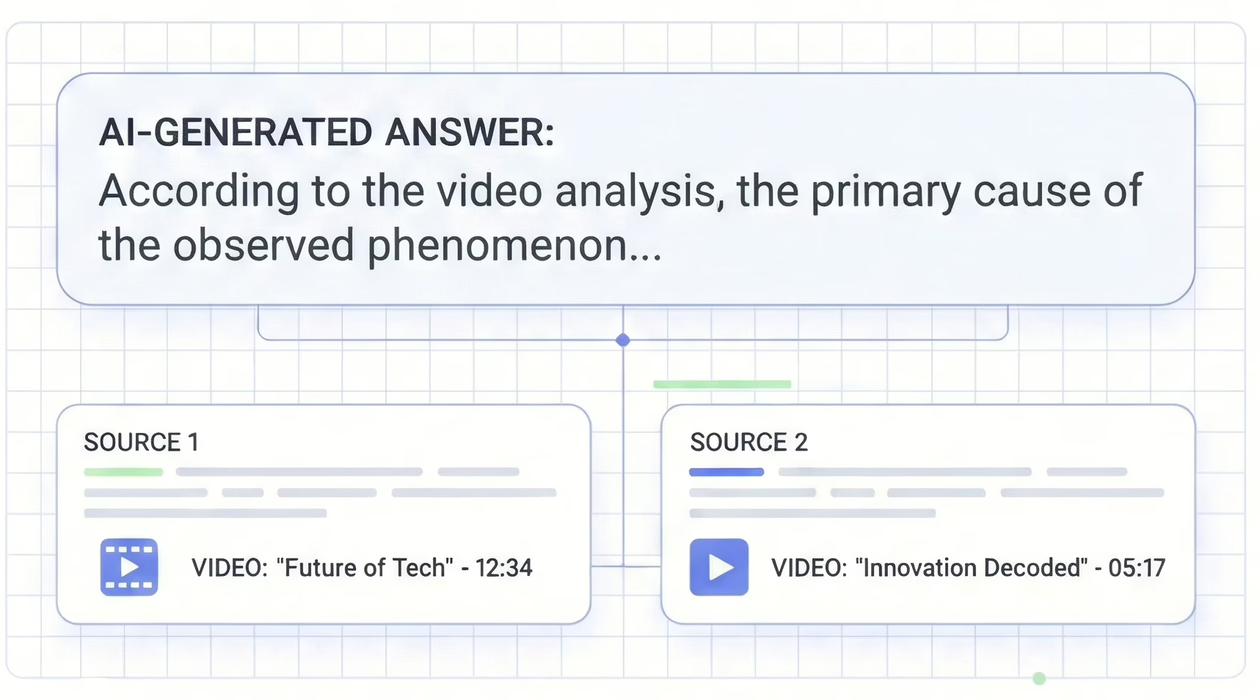
Instead of sending users to a list of 10 links, AI Overviews attempt to answer the question right away — pulling in snippets from web pages, summarizing them, and citing the original source in small gray font (if at all).
This is GEO — Generative Engine Optimization.
Your goal? Be the source that gets summarized, quoted, and cited — not just ranked.
This requires a new strategy that goes beyond ranking algorithms. You now have to train LLMs to choose your content.
How AI Overviews work (Under the hood)
Google’s AI Overview and tools like Perplexity AI:
- Use LLMs (e.g. Gemini, PaLM 2, GPT-4) to interpret user queries
- Retrieve information from web pages, structured data, and knowledge graphs
- Select short, clear, highly relevant text blocks that directly answer the question
- Combine multiple sources to build a summary
- Sometimes cite — sometimes not
That means:
Being #1 on Google ≠ being featured in the AI answer box.
You have to optimize specifically for citation and inclusion.
How to optimize for AI Overviews (GEO Tactics)
1. Lead with the answer
LLMs prefer answers first, elaboration second.
Format content like this:
Q: What is SEO with AI?
A: SEO with AI refers to the practice of optimizing content and websites to perform well in AI-powered search engines and generative models. It focuses on structure, semantics, speed, and machine-readable clarity.
These are easy for LLMs to quote verbatim.
2. Use precise, authoritative language
- Avoid vague phrasing or overly creative intros
- Focus on clarity, brevity, and directness
- Include keywords and entities in the first 1–2 sentences
Bad:
SEO is like painting a house — you want the outside to match the inside.
Good:
SEO with AI is the process of optimizing for search engines powered by machine learning, semantic understanding, and natural language generation.
3. Markup FAQs and definitions
- Use FAQ schema and @type=Answer for machine-readable Q&A
- Consider adding a “Key Takeaways” block at the top of long posts
- Use definition lists (<dl>) in HTML for glossary-style content
4. Use Citations and Trusted Sources
- Link to high-authority domains (Google, Wikipedia, .gov, .edu)
- Cite your own internal content as supporting material
- Include publication dates and authorship metadata (for E-E-A-T compliance)
AI Overviews favor content with traceable source lineage.
5. Create Summary Blocks Within Long Content
- Use TL;DR boxes, sidebars, or in-line recaps
- Tools like Frase or GPT-4 can help you summarize your own post for better snippet visibility
6. Publish With Freshness in Mind
- AI Overviews prioritize recent and regularly updated content
- Even evergreen content should be reviewed and refreshed every 3–6 months
- Update “last modified” dates in schema metadata when relevant
7. Answer Adjacent Queries in the Same Post
LLMs love multi-layered content:
- Don’t just answer “What is AI SEO?”
- Also include:
- “How does AI SEO differ from traditional SEO?”
- “What are the best tools for AI SEO?”
- “How do I measure AI SEO success?”
Use these questions as headers, subheaders, or FAQs.
Tools for GEO Optimization
| Tool | What It Does |
| Frase | Analyze what answers AI is using from your competitors |
| AlsoAsked | Find follow-up queries and related questions |
| Surfer SEO | Score snippetability and section strength |
| ChatGPT Browse | Test which parts of your content get picked up in responses |
| Perplexity AI | Observe how your content is summarized or linked (live) |
???? Example: Winning GEO Format
What is generative engine optimization (GEO)?
Generative Engine Optimization (GEO) is the practice of optimizing content to appear in AI-generated search summaries, such as Google AI Overviews or Bing Copilot. It focuses on clarity, structure, and factual authority to increase citation probability by large language models.
This snippet is:
- Short
- Structured
- Self-contained
Ready to be pulled into a summary box
???? What happens when you win a GEO Spot?
- Higher trust from users who see your brand cited in authoritative answers
- Increased organic exposure without ranking #1
- Greater influence over the narrative in your industry
GEO isn’t just SEO 2.0 — it’s your entry ticket to the AI visibility layer, which is quickly becoming more important than Google’s top 10 links.Great — now it’s time to shift from optimization to strategy.
AI-Driven content strategy, planning smarter, not just harder
You can’t scale modern SEO by guessing. In the age of LLMs, content strategy must be data-driven, intent-mapped, and algorithm-aware. That means:
- Publishing the right content
- In the right format
- At the right moment
- With the right internal structure and context for AI engines to understand
And AI itself can — and should — help you build that strategy.
This is where AI for SEO shines not just as a tool, but as a co-strategist.
Why content strategy has changed forever
In the past, SEO content strategy focused on:
- Keywords with the most volume
- Competitors’ rankings
- Monthly blog post calendars
Today, your strategy must focus on:
- Topic authority, not keyword density
- Intent-based clusters, not isolated articles
- Content comprehensiveness, not sheer length
- AI-ready formats, not just publish-and-wait cycles
AI search engines don’t just index — they interpret. So your strategy must answer:
- What concepts are missing in your content ecosystem?
- Where are your semantic gaps?
- What’s being asked that you’re not answering?
How to build an AI-Driven content strategy
1. Start with an Entity-Based content map
Use AI tools to identify the core entities and concepts in your space.
Example:
If you’re building authority on “AI SEO”, your content map might include:
- AI Overviews
- Generative Engine Optimization
- LLMs
- Schema Markup
- Semantic SEO
- AI Snippet Optimization
- Tools for AI SEO
???? Use ChatGPT or Claude to prompt:
“Give me a concept map of related topics, tools, and questions surrounding [your main topic].”
2. Build Topic Clusters, not one-off posts
A topic cluster includes:
- One pillar page: broad, high-level, evergreen content
- Multiple cluster pages: focused subtopics that link back to the pillar
Example Cluster:
Pillar: The Ultimate Guide to AI SEO
Clusters:
- Best AI SEO Tools in 2025
- How to Structure Content for AI Summaries
- What Is GEO and Why It Matters
- Measuring Success in AI SEO
Why this matters:
AI models look for semantic coverage and topical authority — not just whether you have a blog post on the topic, but whether your entire site understands the space.
Analyze SERPs with AI + Human Input
Tools like Surfer SEO, Frase, and Clearscope help:
- Compare top-performing content
- Detect missing angles
- Optimize based on what the AI deems important
???? Pro move: Use GPT-4 to analyze a top competitor’s entire blog structure.
Prompt:
“Summarize the content structure of [competitor’s blog URL]. What clusters are they building authority around? What are they missing?”
4. Track Trends with Predictive AI
Use AI tools to spot rising keywords, early intent shifts, and future topics.
Try:
- Exploding Topics + GPT: For forecasting upcoming terms
- Google Trends + GPT: For summarizing interest over time
- ChatGPT + GSC exports: For interpreting emerging long-tail impressions
???? Prompt:
“Based on these top 50 queries in my GSC export, what long-tail or emerging user needs can I target next?”
5. Automate Outlines, But Humanize Final Drafts
AI can help:
- Generate SEO-optimized outlines
- Create first drafts of content
- Map headers and internal linking based on intent
But editorial oversight is critical:
- Ensure tone consistency
- Add expertise and real-world context
Fact-check everything (LLMs hallucinate)
???? Tools to Power AI-Driven Content Strategy
| Tool | What It Helps With |
| ChatGPT / Claude | Concept mapping, outline generation, cluster simulation |
| Frase.io | Topic clustering, competitor analysis, SERP gap detection |
| Surfer SEO | Content scoring, brief creation, term usage |
| Jasper AI | Content calendar ideation + multi-channel repurposing |
| Notion AI + Zapier | Automate briefing → writing → scheduling workflows |
Real-World scenario: AI as your content strategist
You ask:
“ChatGPT, I want to become the #1 authority in ‘AI SEO for startups’. Map a content calendar for 3 months with 2 posts per week, broken into awareness, consideration, and decision stages.”
It returns:
- 24 optimized titles
- Suggested formats (guide, comparison, checklist)
- Stage of funnel for each
- Internal link recommendations to build domain authority
That’s not a content calendar — it’s a growth engine.
Ethics and trust in AI SEO — Building E-E-A-T in the Age of Automation
AI is transforming search, but human trust still drives results. That’s why Google and other platforms are placing increased emphasis on E-E-A-T:
- Experience
- Expertise
- Authoritativeness
- Trustworthiness
If your content is AI-assisted — or even AI-generated — it must still pass the trust test. Otherwise, you risk losing rankings, citations in AI Overviews, and audience credibility.
In short: AI can help you scale, but E-E-A-T is what makes it rank and resonate.
Why E-E-A-T Matters More in AI SEO?
In traditional SEO, ranking was often about backlinks, keywords, and page speed.
In AI-powered search, your content must also:
- Reflect lived or professional experience
- Demonstrate authority on the topic
- Be factually reliable enough to be cited by LLMs
- Clearly convey who created it and why it should be trusted
Google’s search quality rater guidelines explicitly direct evaluators to assess:
- If real people created the content
- Whether they have first-hand experience
- Whether claims are verifiable and evidence-backed
- Whether AI-generated content is clearly disclosed and well-reviewed
How to Build E-E-A-T into Your AI SEO Strategy?
1. Add author Bios and credentials
- Clearly show who wrote each post
- Include relevant credentials, degrees, or lived experience
- Link to author profile pages with full context (especially for YMYL topics — health, finance, law)
2. Show First-Hand experience
- Include original insights, screenshots, photos, and case studies
- Use language like: “We tested…”, “Our experience with…”, “Here’s what happened when…”
- AI can generate generalizations — you provide the reality
3. Disclose AI involvement transparently
- If AI was used to assist in drafting or research, say so
- Example footer:
“This article was drafted with the assistance of an AI tool and reviewed by our editorial team for accuracy, clarity, and trustworthiness.”
This builds confidence with users — and with search engines.
4. Cite Reliable sources (and avoid hallucination)
- Use external links to trusted, verifiable domains
- Don’t quote AI outputs as fact unless you’ve verified the information
- Avoid relying on ChatGPT-style answers without fact-checking
Pro tip: Always run GPT-generated outputs through a manual or editorial review before publishing.
5. Add Last Updated Dates + reviewed by sections
- Keep content fresh — especially if your niche evolves quickly
- Label articles with:
- “Last updated: [date]”
- “Reviewed by: [expert name, title]”
This helps LLMs and users know they’re seeing maintained, reviewed content.
6. Use clear brand attribution and contact info
- Include an About Us page, privacy policy, and contact page
- These small trust signals are heavily weighted by Google’s quality algorithms
- It shows you’re a real organization, not an AI content farm
???? Tools to help strengthen E-E-A-T
| Tool | Function |
| Surfer SEO Audit | Flags thin content and keyword-only fluff |
| Originality.ai | Detects AI-written content and evaluates for plagiarism |
| Content at Scale | Combines AI generation + human editing workflows |
| ClearScope | Scores readability and expertise in language structure |
| ChatGPT (with tone prompts) | Adjusts tone to reflect real-world expertise |
⚖️ Ethics ≠ Limitation. It’s a competitive advantage.
Being transparent about your use of AI doesn’t reduce your credibility — it enhances it when paired with:
- Real insight
- Clear authorship
- Well-structured, helpful, verifiable content
LLMs are trained to trust trustworthy pages. That means if your content lacks human signals, it may never be surfaced — no matter how optimized it is.
???? Real-World Test: Can AI Quote you without regret?
Ask yourself:
- Would I cite this content in court, in class, or in a boardroom?
- Can I prove the person behind it has real experience?
- Is the information not only correct — but clearly trustworthy?
That’s what AI models are assessing — in milliseconds.
AI SEO isn’t the Future — It’s the now
Search is no longer just about keywords, backlinks, and 10 blue links.
It’s about:
- How well your content can be understood by machines
- How precisely it can be summarized by LLMs
- How confidently it can be quoted by generative engines like Google’s AI Overviews, Bing Copilot, and ChatGPT
That’s the world of SEO with AI — and it’s already here.
Whether you’re optimizing technical performance, structuring your content for readability, or building entity-rich topic clusters, the game has changed:
You’re no longer optimizing for a search engine.
You’re optimizing with one — and through one.
???? The 9 Foundational Elements Recap
- Structured, High-Quality Content — Make it readable for machines, not just humans
- Semantic Optimization & Entities — Think in concepts, not just keywords
- User Intent Alignment — Deliver exactly what the searcher (and AI) is looking for
- Technical SEO for AI Performance — If AI can’t crawl or load it fast, it’s invisible
- Conversational & Voice Search Readiness — Format for how people talk, not just how they type
- Feedback Loops & Optimization — Monitor performance, learn, and iterate — faster
- GEO Strategy (AI Overview Visibility) — Be the content AI chooses to cite and summarize
- AI-Driven Content Strategy — Plan smarter with topic clusters, tools, and entity mapping
- E-E-A-T and Ethical AI Use — Trust and transparency are your SEO safety net
???? Your Action Plan
Want to build your brand’s presence in the AI-powered search layer?
Here’s how to start:
- ✅ Audit your top 10 pages for snippet-readiness and AI structure
- ✅ Map 3–5 core topic clusters using AI tools
- ✅ Rewrite one piece this week with clearer structure and a TL;DR
- ✅ Add author bios, schema markup, and FAQ sections across your pillar pages
- ✅ Track where your brand is being quoted in AI Overviews (start with Perplexity and ChatGPT Browse)
The key isn’t to publish more — it’s to publish more intelligently.
The brands that win in AI SEO aren’t the ones with the biggest budgets.
They’re the ones who understand how to communicate clearly, structure content intelligently, and earn trust — even from a machine.
So ask yourself:When Google’s LLM starts drafting answers,is your brand in the room?